Wrocław – the city of a hundred bridges, diversity, and constant energy – transforms into a vast stage of carnival celebration at the beginning of each year. From the first days of January until the end of February, the capital of Lower Silesia pulses with the rhythm of music, dance, and laughter. During this period, both residents and visitors from across Poland and abroad can take part in events that combine tradition with modernity, art with entertainment, and local culture with international influences.
The Wrocław Carnival is not a single festival or event – it’s rather a month of intense celebration, during which theaters, clubs, restaurants, museums, and even the city streets offer their own interpretations of the carnival spirit. From colorful masquerade balls to electronic music concerts, from art exhibitions to street parades – there’s something for everyone. But where does this unique atmosphere come from, and how exactly does Wrocław celebrate the carnival season?
1. Carnival – Tradition and Modernity in the Heart of the City
The tradition of carnival originates from European customs of saying farewell to winter and preparing for Lent. In the past, it was a time of dancing, feasting, and symbolic social reversal – servants became masters, and laughter filled the streets.
In Wrocław, this tradition was revived after 1989, as the city began to shape its modern cultural identity. Today, the carnival blends classical elegance with modern energy. It’s a time when the historic halls of palaces and theaters host grand balls, while the urban spaces come alive with club beats and artistic performances.
2. Wrocław Theatrical Carnival – A Celebration of Stage Art
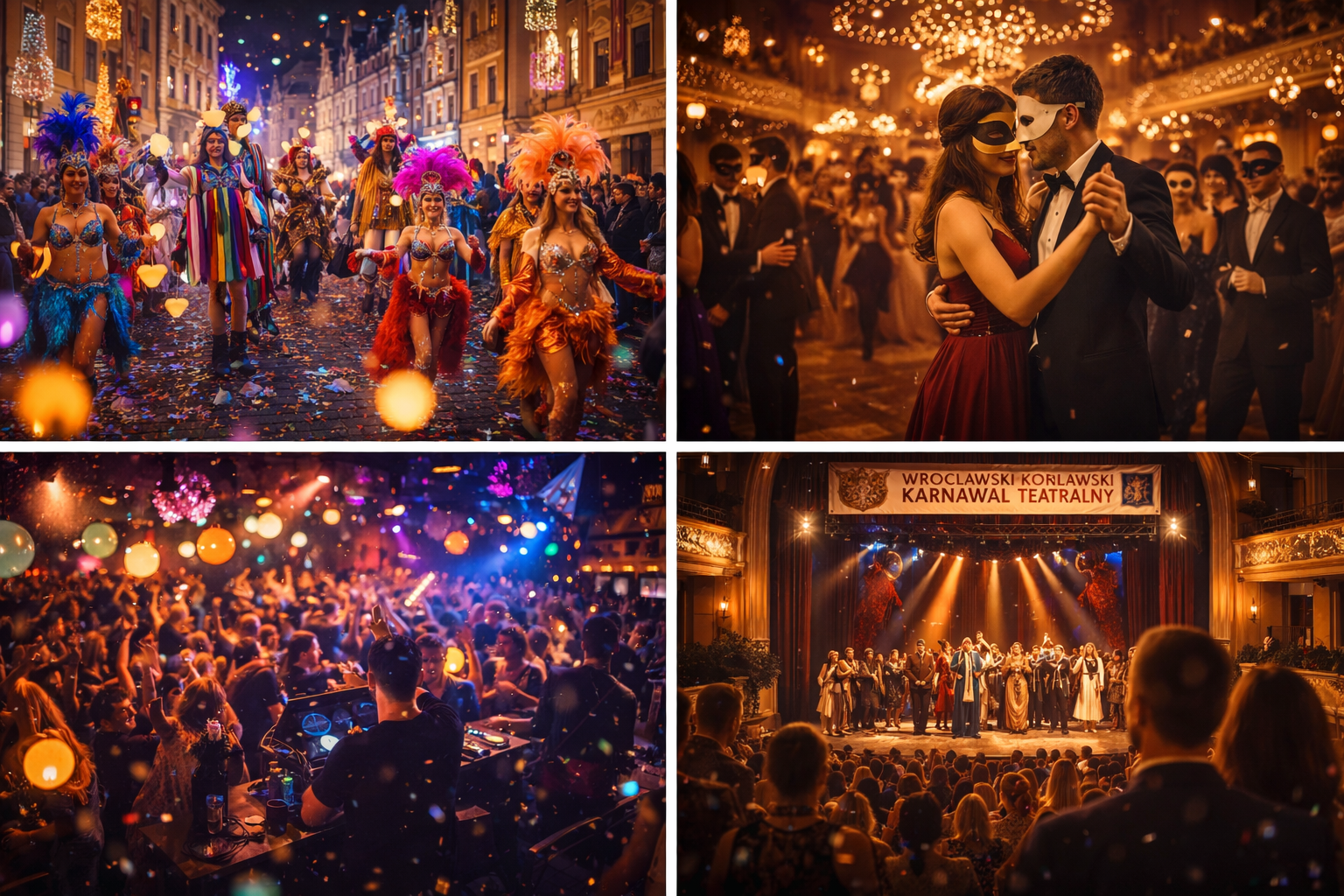
One of the most recognizable elements of the city’s carnival is the Wrocław Theatrical Carnival, organized under the patronage of the Polish Theatre and other local stages. Each February, theaters across Wrocław host performances from Poland and abroad – from classics to avant-garde experiments.
The event attracts both devoted theater lovers and newcomers. Alongside performances, there are workshops, artist meetups, costume exhibitions, and concerts. During this time, Wrocław truly acts – on stage, in the streets, and in artistic clubs.
3. Balls and Masquerades – The Return of Elegance
For those who prefer classical dance and refinement, retro-style carnival balls are becoming increasingly popular. They are held in historic venues such as Centennial Hall, Topacz Castle, or the Pawłowice Palace.
Guests arrive dressed in outfits inspired by the 1920s and 1930s, while waltzes, foxtrots, and swing dominate the dance floors. Such events not only provide entertainment but also revive the spirit of old times, showcasing Wrocław’s rich heritage as a meeting place of cultures and influences.
4. Street Performances and Parades
Equally spectacular are the street parades and open-air events that unfold across Wrocław’s streets. In recent years, themed processions have become increasingly popular – such as the Light Parade on Ostrów Tumski or student-led artistic parades.
The city’s streets become stages for dancers, jugglers, and musicians. These events allow residents to celebrate together in public spaces, informally, without tickets or invitations. This gives the carnival a social and integrative character, connecting people from all walks of life.
5. Clubs and Restaurants – The City’s Nightlife in Full Swing
Wrocław’s carnival wouldn’t be complete without its vibrant nightlife. During this period, the city’s clubs organize special themed events: from Latin nights and techno masquerades to elegant jazz evenings.
Popular venues such as Nietota, Das Lokal, Transformator, Szajba, and Surowiec each bring their own interpretation of carnival fun – some focus on costumes and decor, others on unique DJ sets and all-night dance marathons.
Restaurants also join the festive mood. Many chefs prepare special carnival menus, inspired by world cuisines. It’s a perfect opportunity to combine culinary adventure with celebration – from Italian truffle risotto to Brazilian dishes straight from Rio de Janeiro.
6. Carnival in Culture – Exhibitions, Concerts, and Social Initiatives
The Wrocław Carnival is not only about entertainment. It’s also a time of increased cultural activity. Museums, galleries, and art centers – such as the National Museum, BWA Gallery, and WRO Art Center – organize special exhibitions and art projects focused on themes of masks, identity, and the joy of creation.
It’s also a moment when many social organizations host inclusive initiatives – dance workshops for seniors, balls for people with disabilities, or charity dinners whose proceeds support those in need.
The Wrocław Carnival is much more than a series of events or parties. It is a symbol of openness, joy, and community spirit, deeply rooted in the city’s identity. Wrocław has a unique ability to combine tradition with innovation, local culture with global influences – and the carnival is the perfect example of that harmony.
When the city’s streets fill with music and the lights of colorful masks reflect in the windows of old tenement houses, one can truly feel that Wrocław is alive. Regardless of age, background, or interest – everyone can find something that lets them forget everyday worries for a moment and simply… have fun.