Kazimierz, today one of the most famous districts in Krakow, is known by many people for its charming streets, restaurants, festivals, and rich Jewish tradition. But under all these popular attractions, there is much more – stories that are unknown, forgotten, or intentionally erased. These stories give Kazimierz depth, showing that it is not just a tourist place, but also a place full of dramas, myths, special meetings, and everyday life of the people who lived there long ago.
Beginnings and Legendary Stories
Kazimierz got its name from King Casimir the Great, who in 1335 founded the town with Magdeburg rights. According to legend, the king fell in love with a beautiful Jewish woman from Krakow named Esterka. He built the town to be friendly for Jewish people because of her. Historians are not sure if Esterka really existed, but her story inspired writers and artists for many years. Even today, people say that the king built a separate palace for her or at least gave her a comfortable life near Wawel Castle.
A District of Two Cultures
For many centuries, Kazimierz was its own town. It was special because two cultures lived close together: Christian and Jewish. On the west side were churches, monasteries, and the market, while on the east side, near Szeroka Street, there was the Jewish district with synagogues, cemeteries, and prayer houses.
A little-known fact is that these two communities lived next to each other in surprising harmony for a long time. Even though there were some tensions, trade, crafts, and culture mixed together. Poles used Jewish doctors and shops, and Jews learned new craft skills from Christian artisans. Here, a unique mix of language and customs was born, traces of which we can still find in old books, court records, and family stories.
Forgotten Places and Secret Architecture
Kazimierz is not just its main streets and famous synagogues. Hidden in less obvious places are many unknown stories:
Basements of old houses – Many were used as storage, and during World War II, as hiding places. Whole families sometimes spent weeks hiding there from the occupiers.
Little-known chapels and monasteries – During times when Poland was controlled by other countries, some of these places secretly taught forbidden knowledge, like Polish history, to young people.
Traces of old trade – You can still see special wall spaces where goods were shown. Few know that Kazimierz was once a center of wine trade in Poland, with wine coming all the way from Hungary.
Shadows of War
World War II brought terrible tragedy to Kazimierz. Even though the streets are lively today, many former residents were forced into the Podgórze ghetto (about 17,000 people) and then sent to death camps (about 10,000 people). Poles moved into Jewish homes, and streets like Szeroka and Miodowa became giant marketplaces where almost anything could be bought or sold, often thanks to smugglers.
There are stories of bravery: monks hiding Jewish children, traders sneaking food into the ghetto, and women risking their lives to give Jews medicine and messages. Few of these stories survived because the heroes acted quietly, without witnesses. Today, historians reconstruct them from old documents and survivor accounts.
Post-War Kazimierz – Forgetting and Revival
After the war, Kazimierz fell into ruin for decades. Empty houses, destroyed synagogues, and the absence of old residents made it one of Krakow’s most neglected areas. In the 1970s and 1980s, many locals avoided Kazimierz, thinking it was dangerous.
Unknown stories from this time are about artists and enthusiasts who found inspiration in the ruined buildings. This is where the first alternative art galleries appeared, and informal literary and music meetings took place. These shaped Kazimierz’s reputation as a place of artistic freedom.
Kazimierz Today and Its Memory
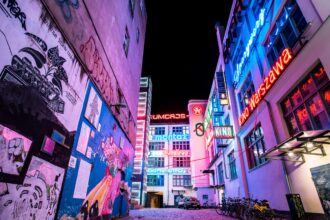
Today, Kazimierz is alive again – full of tourists, restaurants, and cultural events like the Jewish Culture Festival. But behind its modern vibe lie hundreds of years of dramas, meetings, and changes. Every alley and every building has a story – sometimes sad, sometimes full of hope. Knowing these hidden histories makes a walk through Kazimierz not just a tourist experience, but a real journey through time, full of emotions and reflection.
The unknown stories of Kazimierz remind us that every place we see on maps and guides has deep layers of memory. Because of this, Kazimierz is more than just a tourist spot – it is a living witness to Krakow’s multicultural past. Learning these stories teaches us respect for history and opens us to the richness of diversity that has always been Kazimierz’s strength.
Soon, the secrets of Kazimierz will be easier to explore with an extra “helper” – our TUPTUP Guide app. Sign up for our newsletter now to be the first to have the guide on your phone!