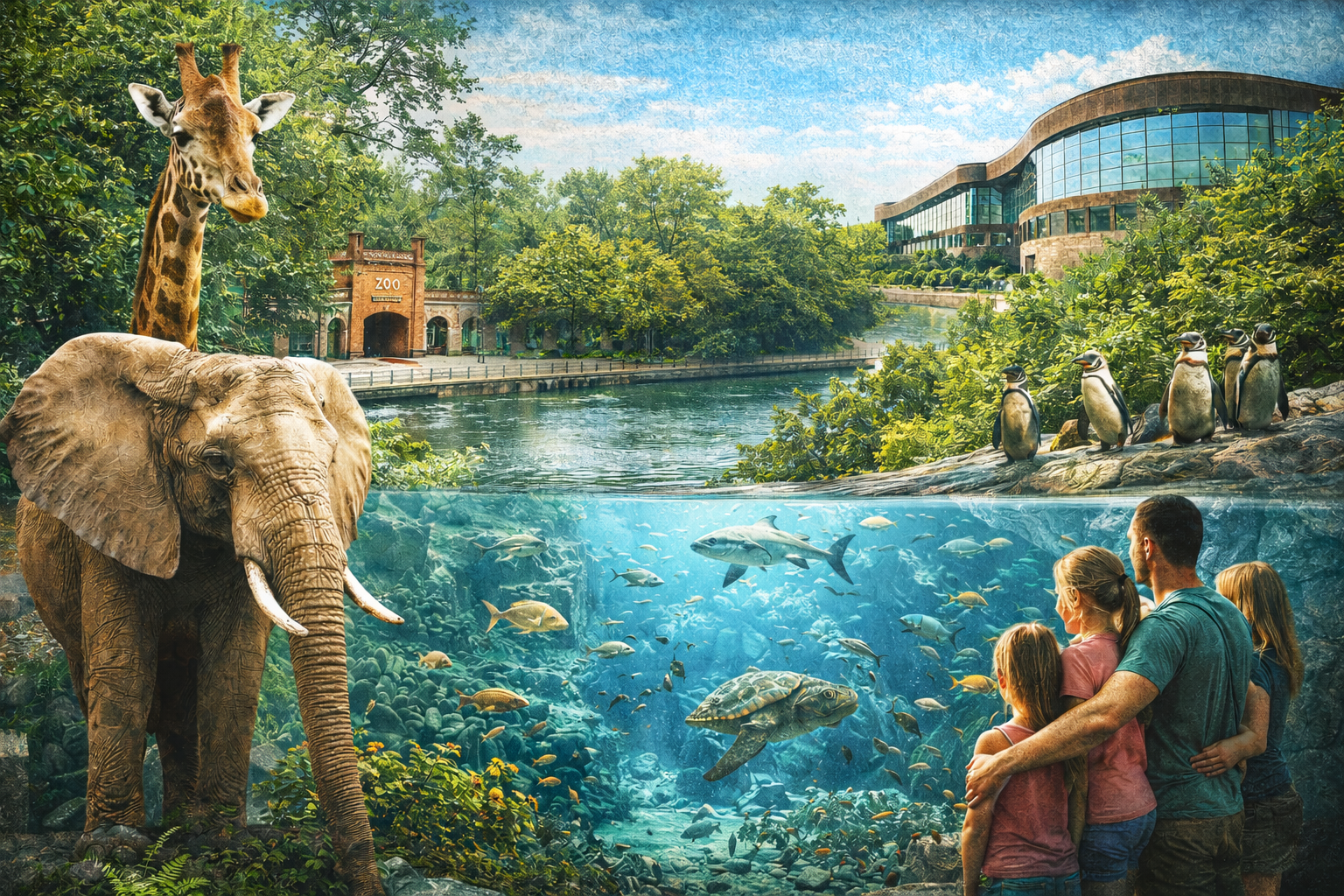
The Wrocław Zoo is one of the most recognizable places on the tourist map of Poland. Although many zoological gardens operate in the country, it is this one—located on the banks of the Oder River—that enjoys the greatest popularity and prestige. It is the oldest zoo in Poland and at the same time the largest in terms of the number of species. Every year it attracts hundreds of thousands of visitors, offering not only the chance to admire exotic animals, but also learning, reflection, and contact with nature in a modern form.
History of the Wrocław Zoo
The Wrocław Zoo was founded in 1865, when the city was still within the borders of Prussia. Even then, it was an exceptional place—one of the largest zoological gardens in this part of Europe. Over the years, it survived difficult times, including the destruction of World War II. After the war, it was rebuilt almost from scratch, gradually expanding its collection of species, enclosures, and pavilions.
A particularly important moment came with modernization in the 21st century, which completely transformed the character of the facility. From a traditional animal park, it evolved into a modern center for environmental education, the protection of endangered species, and the promotion of biodiversity.
The Africarium — The Jewel of the Wrocław Zoo
The most famous and spectacular attraction of the Wrocław Zoo is the Africarium—the only, artificially created space in the world, dedicated exclusively to African ecosystems. The pavilion, opened in 2014, instantly became the landmark of the zoo.
Visitors can take a symbolic journey across the African continent, experiencing environments such as the Red Sea, the Mozambique Channel, the eastern African coastline, and the Congo rainforest. Sharks, rays, Nile hippos, manatees, and African fur seals are just a few of the species that live in the Africarium. Huge tunnels of the object allow visitors to admire the world of Africa as if they themselves were part of it.
A Wealth of Species and the Diversity of Nature
The Wrocław Zoo is home to over 1,100 animal species, making it one of the most diverse zoological parks in Europe. Alongside giants such as elephants, rhinoceroses, and giraffes, you’ll also find small and rare species, including leaf frogs, colobus monkeys, and endangered birds from Asia and Australia.
The zoo places great emphasis on the conditions in which animals live. Modern enclosures and pavilions are designed to recreate natural habitats as faithfully as possible. Thanks to this, the animals are more active, and visitors can observe behavior that is close to what occurs in the wild.
Educational Mission and Protection of Endangered Species
One of the key roles of modern zoos is the protection of biodiversity. The Wrocław Zoo actively participates in European breeding programs, helping save many rare species from extinction. Examples include southern white rhinoceroses, Asiatic lions, and snow leopards.
The zoo also runs extensive educational programs. School trips, field classes, workshops, and varied nature education initiatives help both children and adults understand the importance of environmental protection. Learning happens not only through lessons, but also through the design of exhibits, information boards, and interactive presentations.
A Place Where People Meet Nature
The Wrocław Zoo is not only an institution—it is above all a space that brings people and nature together. Walking in the shade of trees, observing animal behavior, and taking a moment to look at the world from a different perspective all make a visit something more than entertainment.
For many families, this is the place where children first encounter exotic wildlife. It is here that the youngest visitors learn the difference between a cheetah and a leopard, discover the habits of penguins, and understand why protecting nature is so important.
The Wrocław Zoo is undoubtedly the most important and most famous menagerie in Poland. Its history, scale of activity, unique Africarium, and educational mission make it not only a tourist attraction, but also a place of great significance for science and wildlife conservation. For over 150 years, it has been a space where people can meet nature—with respect, curiosity, and responsibility.