Małopolska (Lesser Poland) has been delighting tourists from Poland and all over the world for years. The short distances between the region’s key destinations mean that in just four days you can take a true journey through history, culture, and nature. The route Kraków – Wieliczka – Oświęcim – Zakopane combines urban charm, underground treasures, the difficult memory of history, and the majesty of the mountains. Such a trip is not only sightseeing, but also learning, reflection, and active recreation. Below you’ll find a detailed plan and description of attractions that will help you make the most of these four intense days.
Day 1 – Kraków: the heart of Małopolska
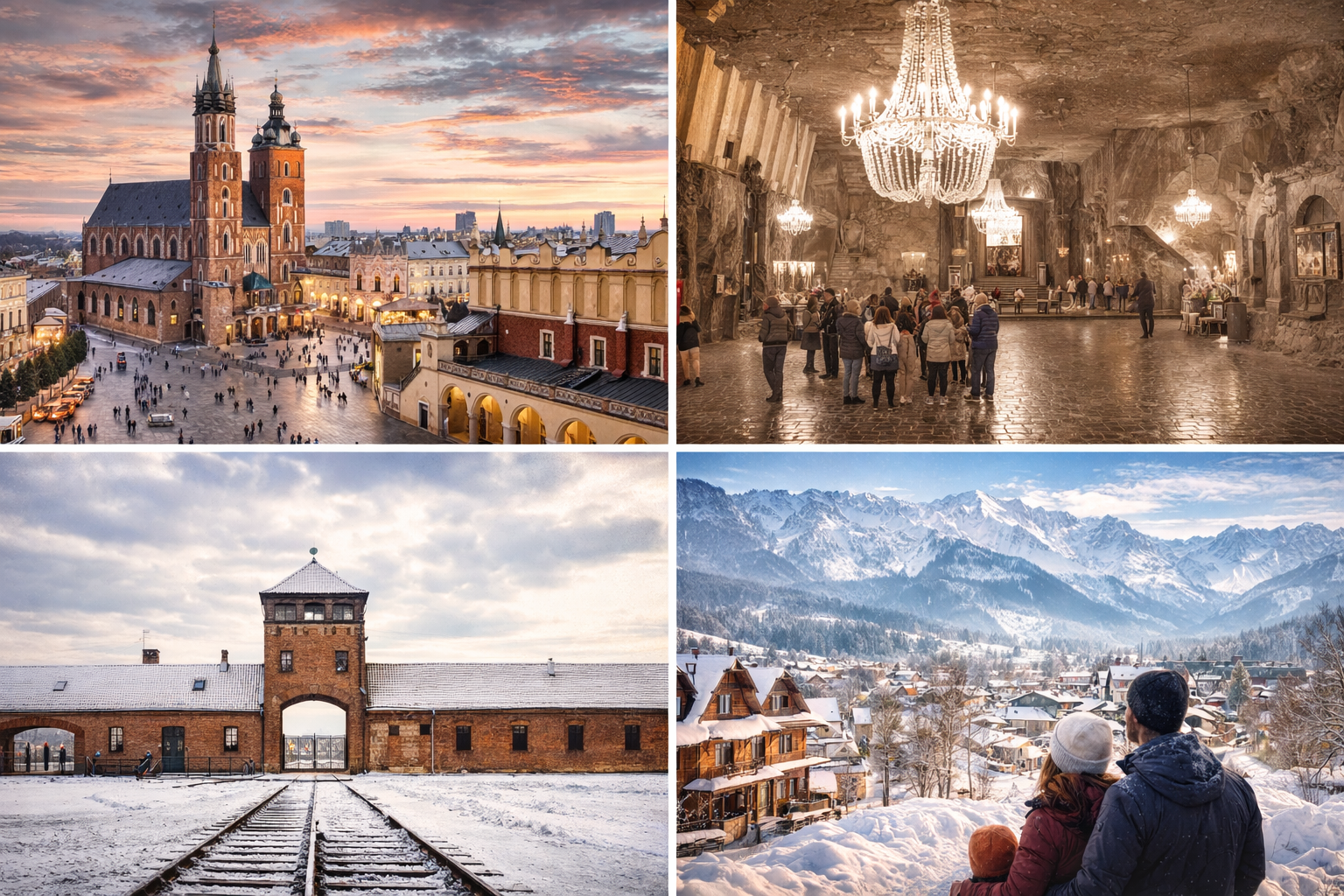
Kraków is a city where the past intertwines with the present at every step. It’s worth starting at the Old Town, where the Main Market Square—one of the largest in Europe—buzzes with life all day long. The Cloth Hall, St. Mary’s Basilica with the altar by Veit Stoss, and the bugle call played from the tower are symbols everyone has heard of, but only on the spot can you truly feel their magic.
You also shouldn’t miss Wawel Hill. The Royal Castle and Wawel Cathedral are a living history lesson—from royal coronations to the story of the modern Polish Republic. For those wanting to understand modern Kraków, Kazimierz—the former Jewish district, now a vibrant cultural hub full of cafés and galleries—is a fascinating stop.
Kraków is also a city of museums. The National Museum, MOCAK, or Schindler’s Factory offer varied perspectives—from contemporary art to the fate of residents during World War II. An evening walk along the Vistula boulevards or dinner in one of the traditional restaurants is the perfect ending to the first day.
Day 2 – Wieliczka: the underground kingdom of salt
Just a few kilometers from Kraków lies the Wieliczka Salt Mine, listed as a UNESCO World Heritage Site. It is a place where nature and human labor have created a unique underground world. The tour leads through numerous chambers, corridors, and chapels; the most famous—St. Kinga’s Chapel—amazes with sculptures and chandeliers made of salt.
During the visit, guides explain the hardships of miners’ work, historical extraction methods, and the beliefs that accompanied underground exploration. For children and teenagers, it’s a fascinating lesson in geology and mining history; for adults, an opportunity for reflection and admiration of human craftsmanship. The mine’s microclimate is also considered particularly beneficial for the respiratory system.
Day 3 – Oświęcim: memory and reflection
The third day has a completely different character. A visit to the Auschwitz-Birkenau State Museum in Oświęcim is emotionally difficult but extremely important. Here you can learn about the dramatic history of the victims of Nazi terror and see the authentic barracks, barbed wire, and exhibitions documenting the extermination of millions of people.
Tours are conducted with a guide, who helps visitors understand the historical context and maintain the appropriate respect for this site. It is a day of learning about responsibility, tolerance, and the value of human life. It’s worth preparing yourself mentally—this is not a typical tourist attraction, but a key element of historical and moral education.
Day 4 – Zakopane: toward the mountains
After a day of reflection, it’s time to reconnect with nature. Zakopane, known as the winter capital of Poland, enchants in every season. Krupówki Street tempts with regional delicacies and highlander handicrafts, while traditional wooden architecture creates a unique atmosphere.
The real adventure begins in the Tatra Mountains. Depending on your fitness and the weather, you can choose Kościeliska Valley, Morskie Oko, or easier hiking routes in the foothills. In winter, ski slopes await, and throughout the year the funicular to Gubałówka or the cable car to Kasprowy Wierch offer spectacular views with minimal effort.
Zakopane is also about culture: concerts, festivals, museums dedicated to the Tatra National Park, or the work of pre-war painter Stanisław Witkacy. An evening by the fire or in a mountain inn with traditional music, is a perfect way to summarize the whole trip.
Four days in Małopolska are a journey through different worlds: the royal chambers of Kraków, the salty tunnels of Wieliczka, the painful history of Oświęcim, and the raw beauty of the Tatras. Each of these places offers something different—joy of discovery, wonder, contemplation, and adrenaline. This route is a great choice for families, groups of friends, or school trips. It combines education with relaxation and, above all, helps you better understand the cultural and historical richness of Poland. It’s worth planning ahead, booking accommodation and tickets in advance to make the most of every minute. One thing is certain: these four days will stay with you for a long time.