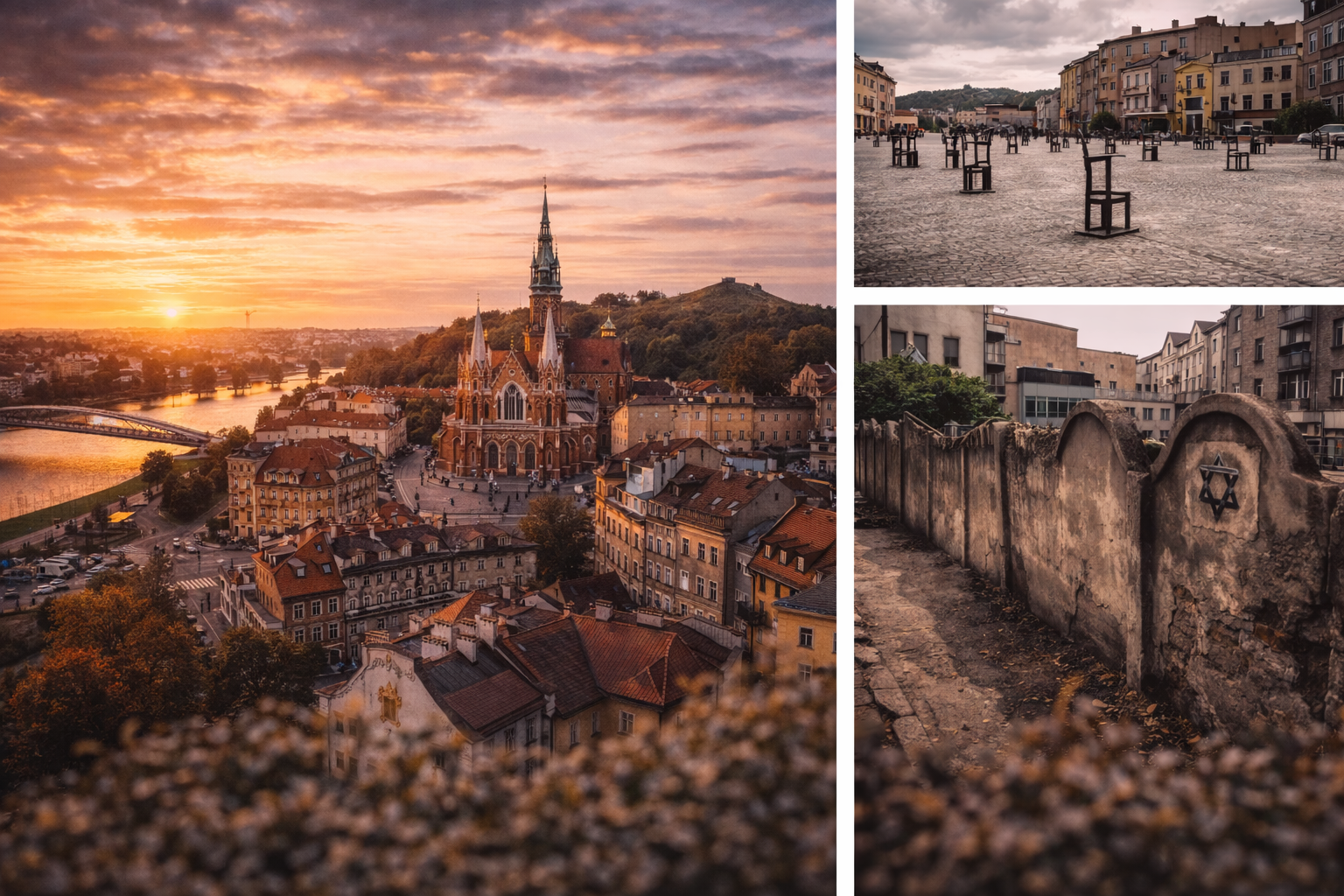
On the opposite bank of the Vistula River, across from Wawel Castle, lies a district that for centuries remained in the shadow of “royal” Kraków. Podgórze – today the 13th District – is a place of extraordinary atmosphere, full of contrasts and stories that blend the romantic mystery of bygone eras with the painful memories of the 20th century. For many visitors, it remains one of the city’s hidden treasures, yet for historians and local enthusiasts, it is a true repository of tales, enigmas, and a spirit that refuses to fade.
Podgórze feels like a living chronicle. Every street, tenement, and hill seems to tell its own story. From ancient burial mounds and medieval legends to the dramatic events of World War II – this is where one can feel the heartbeat of history, still visible in the very landscape of modern Kraków.
A Former City Across the River
Although today Podgórze is part of Kraków, for a long time it was a separate town. Its origins date back to the late 18th century, when in 1784 Emperor Joseph II granted it city rights. The new town of Podgórze was intended to be a model of modern industry and urban planning – a progressive counterpart to “old-fashioned” Kraków. It grew rapidly, with workshops, factories, and institutions emerging, and its residents forming a proud, independent community.
The characteristic urban layout, with Podgórski Square at its center, has survived to this day. Around it stand elegant townhouses, witnesses to an era when Podgórze was the capital of Galician industrial modernity. In 1915, after more than 130 years of independence, the town was officially incorporated into Kraków, becoming an inseparable part of the city’s identity.
Lasota Hill and Traces of Ancient Cultures
One of the most mysterious spots in Podgórze is Lasota Hill, said to have once been the seat of the legendary Prince Krak, the mythical founder of Kraków. At its summit stands Krakus Mound, one of the oldest and most enigmatic structures in Poland. Archaeologists still debate its origins – some believe it to be the burial site of a Celtic chieftain, others see it as a place of ancient Slavic worship.
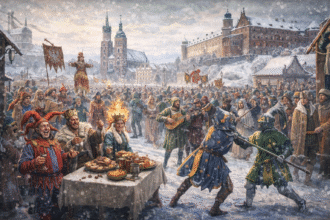
From the top, one can enjoy a breathtaking panorama of Kraków. Every spring, the traditional Rękawka Festival is held here – a modern echo of ancient Slavic rituals honoring the dead. Once a pagan ceremony, today it takes the form of a colorful historical fair that unites locals and visitors in celebrating the city’s heritage.
Shadows of History – Podgórze During World War II
No story of Podgórze can ignore its tragic wartime chapter. It was here, in 1941, that the Nazis established the Kraków Ghetto, imprisoning thousands of Jews from the city and surrounding areas. The ghetto wall, which separated this area from the rest of Kraków, remains one of the most haunting symbols of the Holocaust.
Fragments of the wall can still be seen near Lwowska and Limanowskiego Streets, alongside memorials such as Ghetto Heroes Square – once the ghetto’s central square, from which deportations to the Płaszów and Bełżec camps took place. Today, the square features a striking art installation – the Monument of Empty Chairs, symbolizing the absence of those who never returned.
Nearby, on Lipowa Street, stands the Oskar Schindler’s Enamel Factory Museum, made famous worldwide by Steven Spielberg’s film Schindler’s List. It was here that the German industrialist saved over a thousand Jews from certain death – a shining act of humanity amid the darkest days of Podgórze’s history.
Contemporary Podgórze – A District of Artists and Explorers
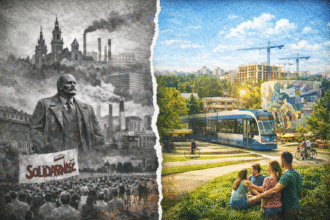
Today, Podgórze is undergoing a remarkable renaissance. After decades of neglect, it has become one of Kraków’s most dynamic and creative areas. Art galleries, cafés, studios, and modern housing developments are revitalizing the district. Former factories and warehouses are being repurposed – examples include Podgórze Market Hall, Stacja Wisła, and the Cricoteka Centre for Contemporary Art, housed in a former power plant.
The district’s atmosphere attracts artists, photographers, and urban explorers alike. Murals tell stories of identity and resilience, while narrow alleys and historic courtyards invite visitors to slow down and wander. A walk along the Vistula boulevards or a climb up the Krzemionki hills is not only a physical journey but also a spiritual encounter with the layered history of this unique place.
Podgórze defies simple definition. It is at once ancient and modern, beautiful and tragic, filled with both light and shadow. Its strength lies in this very duality – the ability to remember while continuing to grow.
To visit Podgórze is to discover that it is more than just another part of Kraków. It is a world unto itself – one where history speaks from every stone, and the present strives to understand and honor it. A walk through Podgórze is not merely a sightseeing experience, but a meeting with the very soul of Kraków – mysterious, nostalgic, and endlessly fascinating.